Step 2 — Create Tags
Add the individual values (Physics, Easy, CBSE, etc.) inside each Tag Group so they can be applied to questions and assessments.
Tags are the individual values that live inside Tag Groups — for example, the Subject group contains tags like Physics, Chemistry, and Mathematics. You must have at least one Tag Group before you can create tags.
# Navigating to Tags
- Log in to the admin panel.
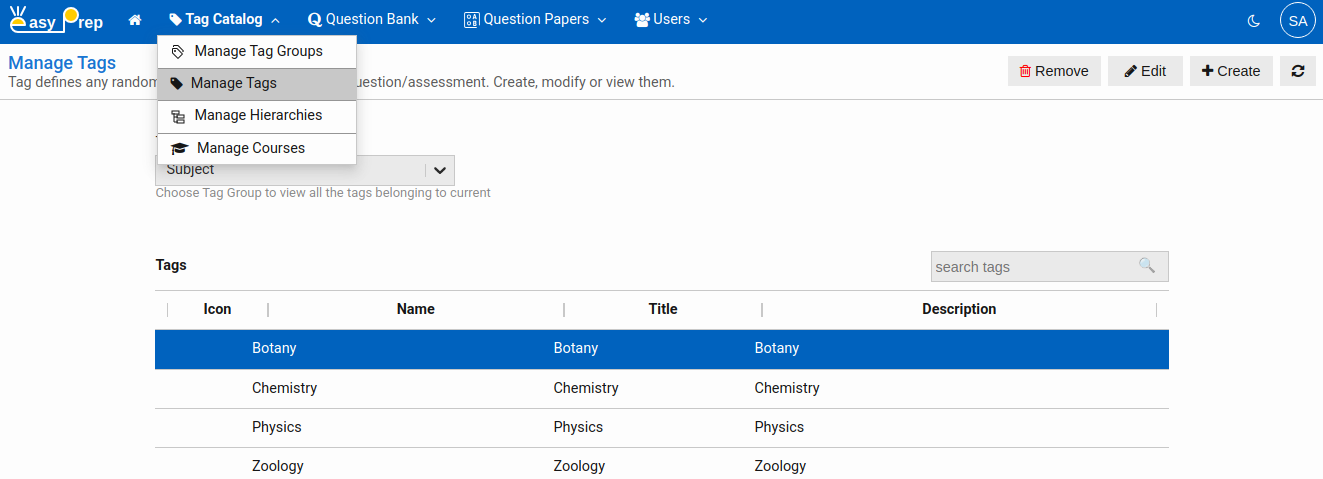
- In the left navigation, open Tag Catalog.
- Click Tags.
The Manage Tags screen appears.
# Viewing Tags
At the top of the screen, a Tag Group dropdown lets you choose which group to view. Only tags belonging to the selected group are shown. You can further narrow the list by typing in the filter box.
The columns in the tag list are:
| Column | Description |
|---|---|
| Icon | Optional icon image for the tag. |
| Name | The system name of the tag. |
| Title | The human-readable label shown in forms and reports. |
| Description | A short tooltip hint. |
Click a row to select a tag. The Edit and Remove toolbar buttons become active. Double-clicking a row opens the Edit form directly.
# Creating a Tag
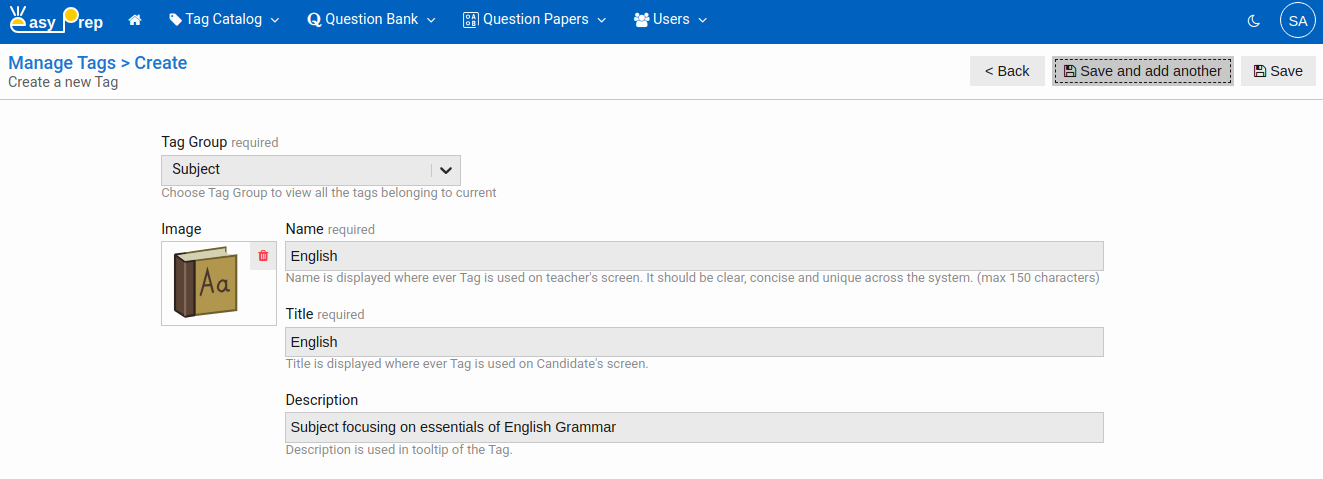
- Select the Tag Group you want to add tags to using the dropdown.
- Click Create in the toolbar.
Icon (optional)
Click the icon area to upload or paste a small image. The icon appears alongside the tag name in pickers and lists.
Tag Group (required)
The group is pre-selected based on your current selection. You can change it here if needed. All available groups appear in the dropdown.
Name (required)
A short, unique identifier within the group (e.g., physics, easy). Must be unique within the selected group. Maximum 150 characters.
Title (required)
The human-readable label shown in forms and student-facing screens (e.g., Physics, Easy). Defaults to the Name if left blank. Maximum 150 characters.
Description (optional)
A brief tooltip note (max 150 characters) to help question setters understand when to use this tag.
# Saving
- Click Save to save and return to the tag list for the group.
- Click Save & and add another to save this tag and immediately start entering another one. This is the fastest way to add many tags in one session.
If a tag with the same name already exists in the group, an error message appears so you can choose a different name.
Tag names must be unique throughout the system. If you still want to have duplicate tags (e.g., Structure of Atom belonging to physics and chemistry both, but they have different content), you can make them unique by adding parent tag name in the name, so, Structure of Atom - Chemistry, Structure of Atom - Physics. Title can still be same, Structure of Atom.
Name of the Tag Group can be changed later on. When you change, it should be unique.
# Editing a Tag
- Select the tag in the list.
- Click Edit in the toolbar (or double-click the row).
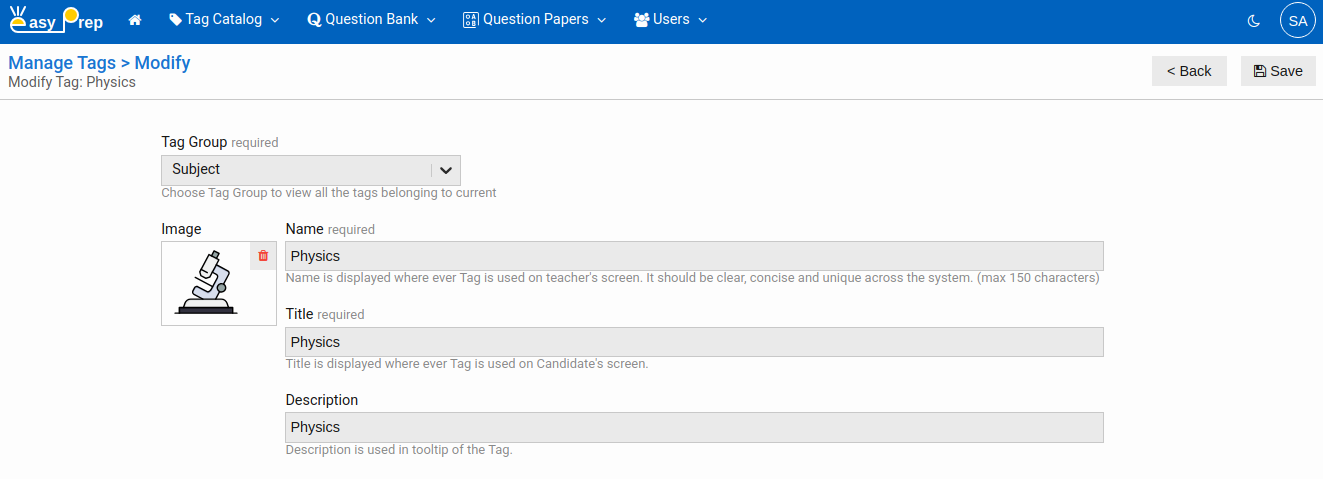
- The Modify form opens pre-filled with the current values.
- Update any fields and click Save.
# Removing a Tag
A tag can only be removed if it is not currently used by any question, assessment, or Tag Hierarchy.
- Select the tag and click Remove.
- The Remove screen opens. If the tag is still in use, you will see a summary:
| Resource | Count |
|---|---|
| Hierarchies | 1 |
| Questions | 25 |
| Assessments | 0 |
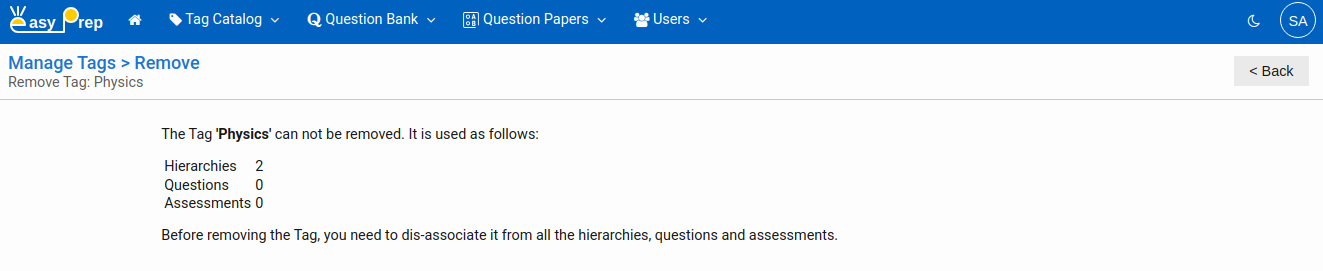
Clear all usages first, then return to remove the tag. Once all counts are zero, type the exact tag name in the confirmation field and click Remove.
# Next Step
Once your tags are in place, go to Step 3 — Create Tag Hierarchies to define parent-child relationships between them — or skip this step and start adding questions to your question bank.